Published research on the reference compound class. Provided for scientific context only. Not a claim about the product supplied.
What is TB-500, exactly?
Start with the parent molecule. Thymosin beta-4 is a 43-amino-acid peptide found throughout the body, and it's the most abundant member of its family in mammal tissue. Its main job is managing actin, the protein that forms a cell's internal scaffolding and lets it move and change shape.2
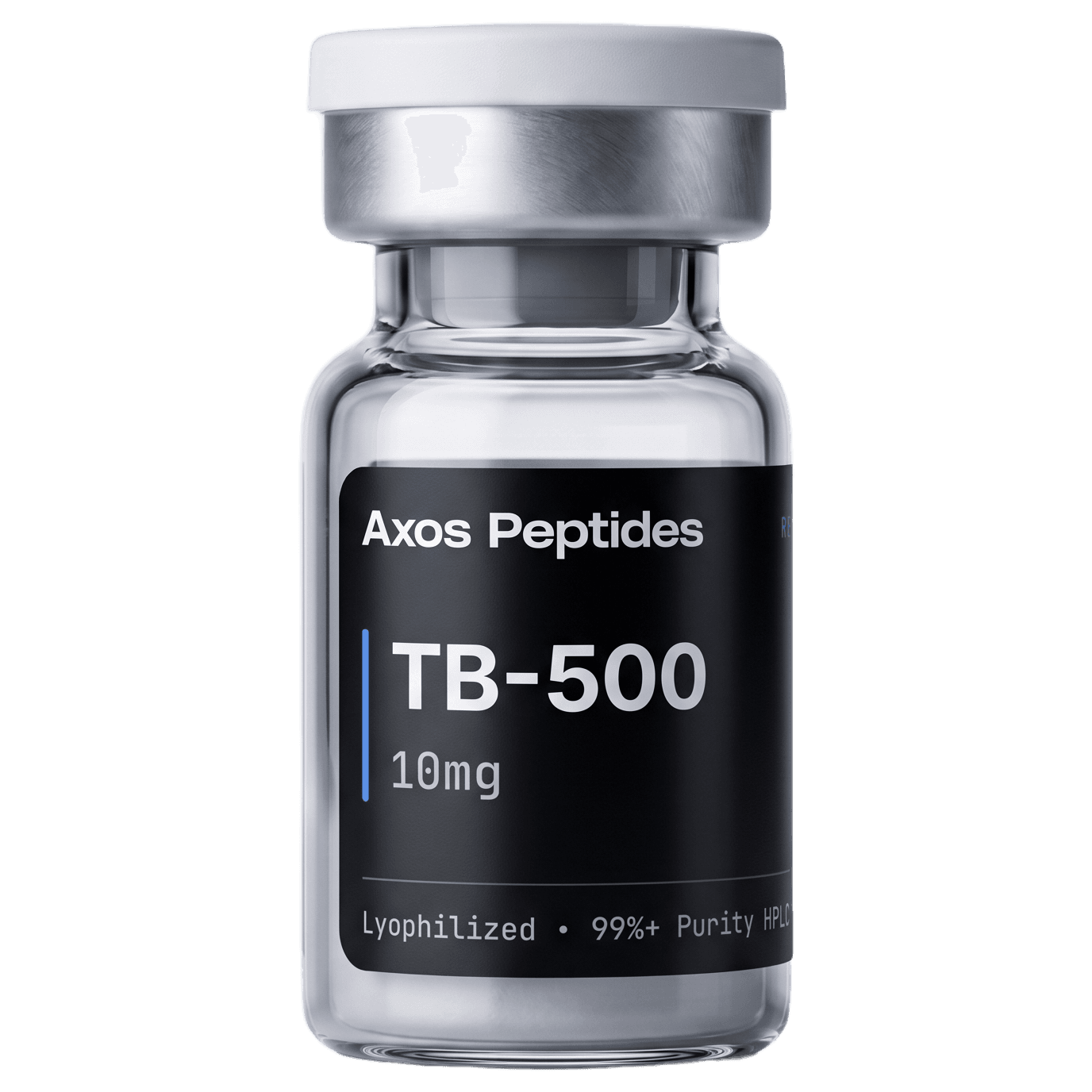
In the published literature, TB-500 means a synthetic version of one small, active region of that protein: the seven-amino-acid sequence LKKTETQ, with a small chemical cap (an acetyl group) on one end.1 It emerged as a veterinary preparation, and concern about its use in horse racing led anti-doping labs to build a dedicated test that finds it in blood and urine.1
Why actin is the whole story
To move, a cell has to rebuild its actin scaffolding over and over. Thymosin beta-4 binds loose actin units and keeps them on standby. That's why it shows up wherever cells need to migrate.6
After an injury, platelets and immune cells release thymosin beta-4 into the area. A major review describes it helping protect cells, calming inflammation and drawing in the stem and progenitor cells that build new blood vessels. It also cut the number of scar-forming cells (myofibroblasts) in wounds, which research links to less scarring.6
What the research reports
Here's what the key studies found. Watch the models: most used the full thymosin beta-4 protein, in cells or animals.
| Area | Model | Reported finding |
|---|---|---|
| Wound repair | Rats | Skin regrowth up 42% at day 4 and up to 61% at day 7, with more collagen and new blood vessels3 |
| Cell migration | Human skin cells (lab) | Migration up 2 to 3 times with as little as 10 picograms3 |
| Blood-vessel growth | Human vessel cells (lab) | The 7-amino-acid actin motif matched the full protein; pieces without it did nothing2 |
| Heart repair | Mice | Switched on a cell-survival pathway (ILK and Akt) and improved heart function after injury4 |
| New heart vessels | Mice | Woke dormant progenitor cells in the heart's outer layer to form new vessels5 |
The Philp study is the one that matters most for TB-500. Researchers tested the full protein against small pieces of it. The actin-binding motif alone drove the blood-vessel effects in their tests, at nearly the same strength as the whole molecule, while pieces missing that motif were inactive.2 That finding is the scientific reason TB-500 exists.
TB-500 vs thymosin beta-4: the fine print
Full-length thymosin beta-4 has moved into clinical research for skin wounds, eye injuries and heart tissue.6 TB-500, the fragment, hasn't had that kind of formal testing. That's the honest state of the evidence.
How TB-500 is supplied
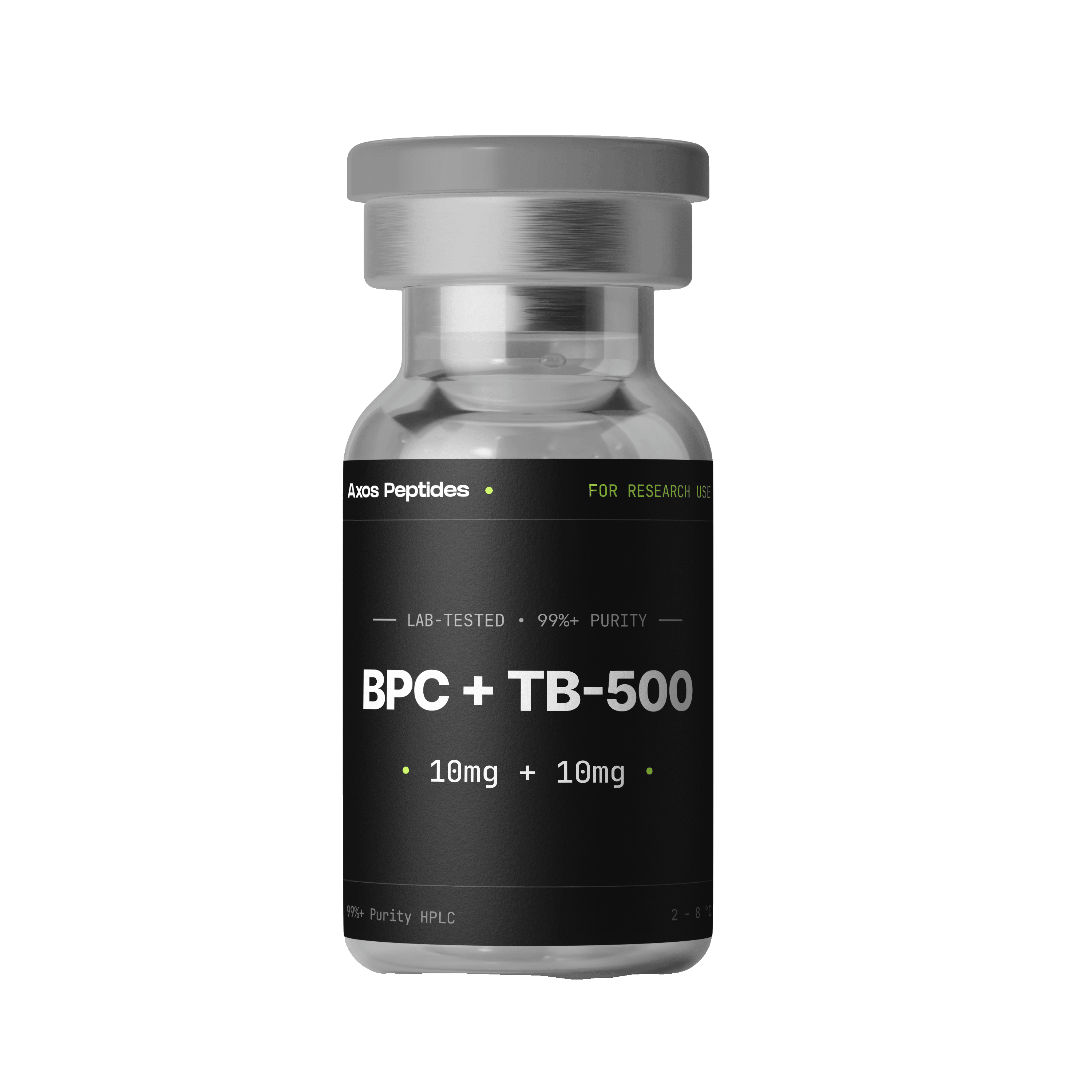
TB-500 is available on its own, paired with BPC-157 in our BPC-157 + TB-500 blend, and inside the GLOW and KLOW blends (see how those compare). Every lot is tested by an independent lab before release, and the report names the molecule it found. Read the current one in the TB-500 lab reports.
Sources
Numbered as cited in the text
- 1
Doping control analysis of TB-500, a synthetic version of an active region of thymosin β4, in equine urine and plasma by liquid chromatography-mass spectrometry
Ho EN, Kwok WH, Lau MY, et al. · Journal of Chromatography A 1265:57–69 · 2012
- 2
The actin binding site on thymosin beta4 promotes angiogenesis
Philp D, Huff T, Gho YS, et al. · The FASEB Journal 17(14):2103–2105 · 2003
- 3
Thymosin beta4 accelerates wound healing
Malinda KM, Sidhu GS, Mani H, et al. · Journal of Investigative Dermatology 113(3):364–368 · 1999
- 4
Thymosin beta4 activates integrin-linked kinase and promotes cardiac cell migration, survival and cardiac repair
Bock-Marquette I, Saxena A, White MD, et al. · Nature 432(7016):466–472 · 2004
- 5
Thymosin beta4 induces adult epicardial progenitor mobilization and neovascularization
Smart N, Risebro CA, Melville AA, et al. · Nature 445(7124):177–182 · 2007
- 6
Thymosin β4: a multi-functional regenerative peptide. Basic properties and clinical applications
Goldstein AL, Hannappel E, Sosne G, et al. · Expert Opinion on Biological Therapy 12(1):37–51 · 2012
- 7
The promoting effect of pentadecapeptide BPC 157 on tendon healing involves tendon outgrowth, cell survival, and cell migration
Chang CH, Tsai WC, Lin MS, et al. · Journal of Applied Physiology 110(3):774–780 · 2011