Published research on the reference compound class. Provided for scientific context only. Not a claim about the product supplied.
The cell's own antioxidant
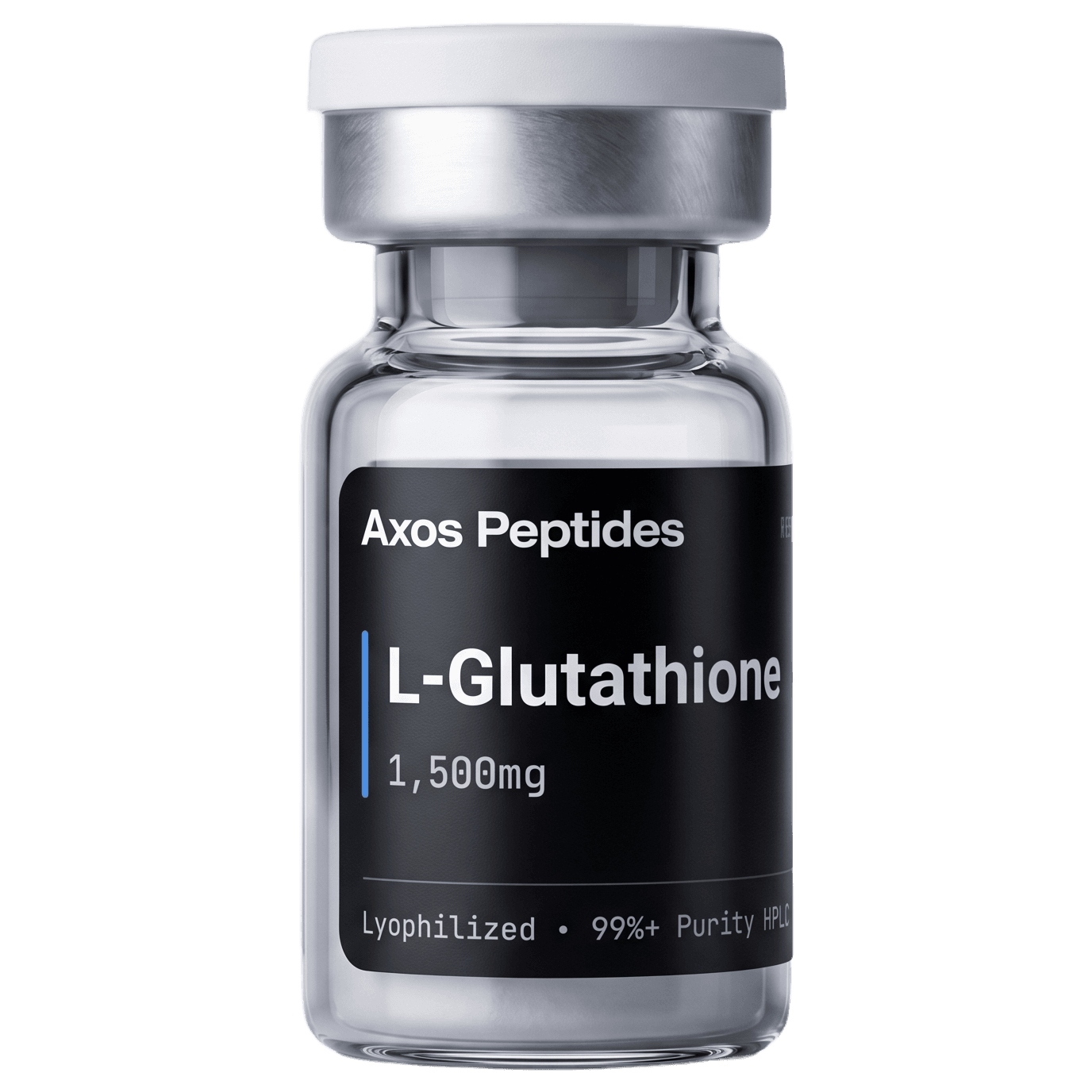
Glutathione is a tripeptide. Three amino acids: glutamate, cysteine and glycine. Every cell makes it. The literature calls it the most abundant antioxidant the body produces itself.1
Its job is redox regulation. Cells constantly make reactive molecules as a by-product of using oxygen. Glutathione is a main part of how those get neutralised. It is also involved in immune function.1
That makes glutathione unusual here. Most research peptides are studied for what they might do. Glutathione's role is settled biochemistry. Its open question is a different one.
Identity
- Tripeptide
- Type
- Glutamate, cysteine, glycine
- Built from
- Principal cellular antioxidant
- Role
- Every cell in the body
- Made by
Does taking it raise your own stores?
This is the question that actually matters, and there is a real trial to answer it.
Researchers ran a six-month randomised, double-blinded, placebo-controlled trial in 54 non-smoking adults. Participants took oral glutathione at one of two amounts, or placebo.1
The team measured glutathione in five places: blood, red cells, plasma, lymphocytes and cheek-lining cells.1
The result: glutathione levels in blood increased at 1, 3 and 6 months compared with baseline. A set of immune markers was measured in a subset of participants as a secondary outcome.1
A 2026 review examines the benefits and limitations of oral supplementation more broadly, which is the appropriate next document for anyone weighing the question.3
The cosmetic use, and what dermatology says about it
Across much of the world, glutathione is sold primarily for skin lightening rather than for redox biology. That use has been reviewed, and the review is blunt.
A 2018 paper in *Dermatology Practical and Conceptual* looked at the surrounding hype. It concluded that the widespread use seems unjustified, singling out the parenteral route.2
It gave three reasons. Gaps in what is known about the mechanism. Limited clinical evidence for a skin-lightening role. And statutory bans or advisories issued by certain federal agencies.2
The same review notes that glutathione's approved uses are narrow. They cover severe liver disorders and prevention of certain chemotherapy-associated effects.2 Those are not the uses it is marketed for.
Later work has continued in the same direction, with systematic and critical reviews examining the lightening claim across routes of administration.4
Reading glutathione claims carefully
- Its biology is not in doubt. Glutathione's role as the principal cellular antioxidant is established.1
- Raising stores is demonstrated; benefit is not. The randomised trial measured levels, not outcomes.1
- The cosmetic claim is the weakest part of the literature, and regulators have acted on it.2
- "Antioxidant" does not automatically mean good. Redox balance is a balance. More is not simply better, and the trial did not test that premise.
Glutathione is also discussed alongside NAD+, since both sit in cellular metabolism and both attract broad claims. That page is here.
Sources
Numbered as cited in the text · how we source
- 1
Randomized controlled trial of oral glutathione supplementation on body stores of glutathione
Richie JP Jr, Nichenametla S, Neidig W, et al. · Eur J Nutr. 2015;54(2):251-263 · 2015
- 2
Glutathione for skin lightening: a regnant myth or evidence-based verity?
Sonthalia S, Jha AK, Lallas A, et al. · Dermatol Pract Concept. 2018;8(1):15-21 · 2018
ReviewPubMed 29445569 - 3
A review of the potential benefits and limitations of oral glutathione supplementation
Fathizadeh H, Rezaeipour H, et al. · Inflammopharmacology. 2026 · 2026
ReviewPubMed 42446814 - 4
Glutathione as a skin-lightening agent and in melasma: a systematic review
Sarkar R, Yadav V, et al. · Int J Dermatol. 2025 · 2025
Systematic reviewPubMed 39444151