Published research on the reference compound class. Provided for scientific context only. Not a claim about the product supplied.
So, is NAD+ a peptide?
No. A peptide is a short chain of amino acids, the same building blocks that make up proteins. NAD+ (nicotinamide adenine dinucleotide) is built from two nucleotides linked together: one carries adenine, and the other carries nicotinamide, a form of vitamin B3.
So why does it sit next to peptides? Practical reasons. It's supplied the same way, as a freeze-dried powder, it's handled the same way in the lab, and many of the same researchers study both.
| A peptide (e.g. BPC-157) | NAD+ | |
|---|---|---|
| What it is | A chain of amino acids | A coenzyme (a dinucleotide) |
| Built from | Amino acids | Two nucleotides |
| Main role | Signalling; varies by peptide | Energy chemistry and enzyme fuel |
| Supplied as | Freeze-dried powder | Freeze-dried powder |
What NAD+ does all day
NAD+ has two big jobs.
- Energy chemistry. It's the cell's hydrogen carrier, shuttling energy through the reactions that turn food into usable fuel.5
- Enzyme fuel. Key enzymes consume NAD+ to do their work, including the sirtuins, a family central to aging research, and PARPs, which help repair damaged DNA.1
One widely cited review sums it up. By feeding these NAD+-sensing enzymes, NAD+ helps control hundreds of key processes, from energy metabolism to cell survival. Its levels even rise and fall with food intake, exercise and the time of day.5
Why NAD+ falls with age
The age-related decline is one of the most consistent findings in this field.6 In one human study, researchers measured NAD+ in skin samples from 49 people, from newborns to age 77. NAD+ levels dropped as age went up, in both men and women. In men, the DNA-repair enzyme PARP grew more active with age as NAD+ fell. That hints that repairing built-up DNA damage may be using up the supply.1
Mouse research points to a second drain. An enzyme called CD38, which breaks down NAD+, increases with age, and it's required for both the age-related NAD+ drop and the decline in mitochondrial function that comes with it. CD38 also breaks down NMN, one of NAD+'s building blocks.2
In animal studies, restoring NAD+ in old or unwell animals has been reported to promote health and even extend lifespan.5 That's why NAD+ became one of the most-watched targets in aging research.7
What happens when researchers raise NAD+?
Most human research doesn't use NAD+ itself. It uses precursors: smaller molecules the body converts into NAD+. Here's what the key studies found.
| Study | Who | What researchers found |
|---|---|---|
| NMN in mice (2011) | Mice on a high-fat diet, and older mice | Restored NAD+ and improved glucose tolerance8 |
| NR in people (2018) | Healthy middle-aged and older adults, two 6-week phases | Well tolerated; raised NAD+ metabolism3 |
| NMN in people (2021) | Postmenopausal women with prediabetes, 10 weeks | Improved muscle insulin sensitivity and signalling4 |
| NAD+ itself (2019) | Pilot study, NAD+ delivered into the bloodstream | No rise in blood NAD+ for the first 2 hours9 |
That last study is a useful reality check. When NAD+ itself went straight into the bloodstream, blood levels didn't rise for the first two hours: the body cleared it from the blood about as fast as it arrived.9 The body handles NAD+ quickly, which is exactly why so much research focuses on how it's made, used and broken down.
How NAD+ is supplied for research
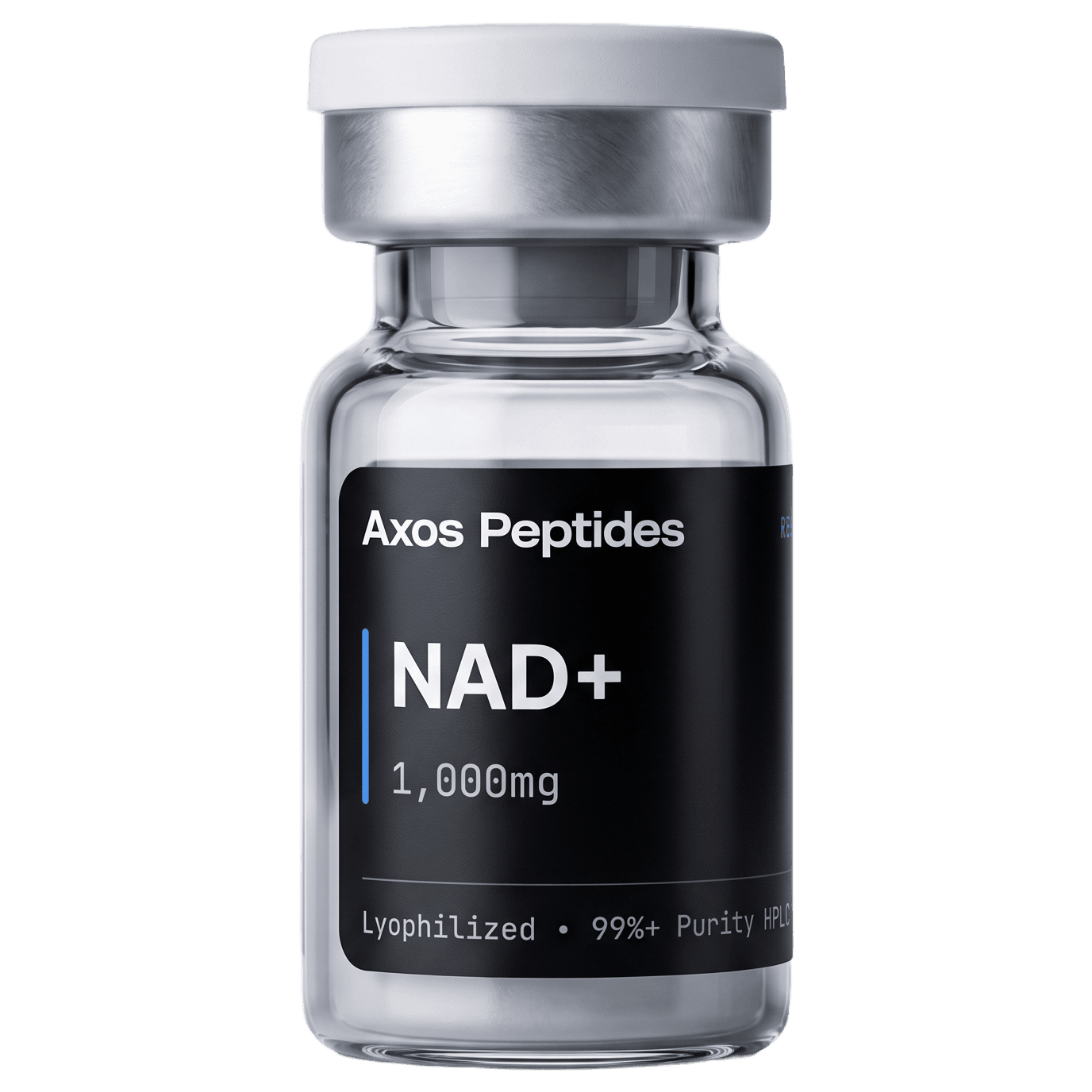
Our NAD+ is supplied as a freeze-dried research material. Every lot is tested by an independent lab before release, with the exact HPLC purity on the certificate. Read the current one in the NAD+ lab reports.
Sources
Numbered as cited in the text
- 1
Age-associated changes in oxidative stress and NAD+ metabolism in human tissue
Massudi H, Grant R, Braidy N, et al. · PLoS One 7(7):e42357 · 2012
- 2
CD38 dictates age-related NAD decline and mitochondrial dysfunction through an SIRT3-dependent mechanism
Camacho-Pereira J, Tarragó MG, Chini CCS, et al. · Cell Metabolism 23(6):1127–1139 · 2016
- 3
Chronic nicotinamide riboside supplementation is well-tolerated and elevates NAD+ in healthy middle-aged and older adults
Martens CR, Denman BA, Mazzo MR, et al. · Nature Communications 9(1):1286 · 2018
- 4
Nicotinamide mononucleotide increases muscle insulin sensitivity in prediabetic women
Yoshino M, Yoshino J, Kayser BD, et al. · Science 372(6547):1224–1229 · 2021
- 5
Therapeutic potential of NAD-boosting molecules: the in vivo evidence
Rajman L, Chwalek K, Sinclair DA · Cell Metabolism 27(3):529–547 · 2018
- 6
NAD+ metabolism and its roles in cellular processes during ageing
Covarrubias AJ, Perrone R, Grozio A, Verdin E · Nature Reviews Molecular Cell Biology 22(2):119–141 · 2021
- 7
NAD+ in aging, metabolism, and neurodegeneration
Verdin E · Science 350(6265):1208–1213 · 2015
- 8
Nicotinamide mononucleotide, a key NAD+ intermediate, treats the pathophysiology of diet- and age-induced diabetes in mice
Yoshino J, Mills KF, Yoon MJ, Imai S · Cell Metabolism 14(4):528–536 · 2011
- 9
A pilot study investigating changes in the human plasma and urine NAD+ metabolome during a 6 hour intravenous infusion of NAD+
Grant R, Berg J, Mestayer R, et al. · Frontiers in Aging Neuroscience 11:257 · 2019